
Rollover equity and governance rights are critical qualitative factors in 2026 PE CPA firm transactions. Strong minority protections and balanced rollover terms can add up to +0.3x to your EBITDA multiple. Here’s how buyers score them and what you can do to negotiate better outcomes.
Read MoreInsights

Practical insights and expert guidance on CPA firm M&A, valuations, EBITDA optimization, private equity trends, and exit strategies. Ashley-Kincaid provides timely, data-driven analysis to help CPA firm owners navigate sales, succession planning, and maximize firm value.
Average fee quality and pricing power is one of the key qualitative factors in 2026 CPA firm valuations. In LBO models, strong pricing can add up to +0.10x to your EBITDA multiple. Here’s how buyers score this factor and what you can do to strengthen your position.
Read MoreLocation is more than just where your firm is based — it’s a key qualitative factor that can add or subtract up to 0.4x from your EBITDA multiple. Here’s how buyers score geographic scalability and market position in 2026 and what you can do to strengthen your valuation.
Read MoreHigh partner and staff retention risk is one of the biggest red flags in 2026 CPA firm M&A. In LBO models, it can trigger adjustments as large as -0.6x. Here’s exactly how buyers score this factor and what you can do to strengthen your team and boost your valuation.
Read MoreModern technology is no longer a “nice-to-have” — it’s a major valuation driver in 2026 CPA firm M&A. In LBO models, strong technology infrastructure can add up to +0.5x to your EBITDA multiple. Here’s how buyers evaluate it and what upgrades deliver the biggest impact.
Read MoreThe difference between an add-on and a platform acquisition can easily mean 1.0x–2.0x higher EBITDA multiples. Here’s exactly how buyers score platform potential and what you can do to position your firm for the best possible outcome in 2026.
Read MoreConsistent organic growth is one of the most powerful qualitative factors in 2026 CPA firm M&A. In LBO-based models, strong annual growth can add up to +0.5x to your EBITDA multiple. Here’s exactly how buyers score this factor and what proactive steps can significantly increase your valuation.
Read MoreHigh client concentration is one of the biggest valuation risks in 2026 CPA firm M&A. Even a single client representing 15–20%+ of revenue can trigger meaningful negative adjustments to your EBITDA multiple. Here’s exactly how buyers score this factor and what you can do to strengthen your position.
Read MoreWhile high recurring revenue is important, sophisticated PE buyers in 2026 also scrutinize your overall service mix. The quality, profitability, and scalability of your engagements — especially the balance between compliance and higher-value advisory/CAS work — can add or subtract 0.15x to 0.10x (or more) from your multiple in LBO-based valuations.
Read MoreIn 2026, private equity buyers rarely apply generic multiples. Instead, they use a structured LBO framework that starts with a base multiple tied to your Normalized EBITDA margin and then applies 13 specific qualitative adjustments. These factors evaluate risk, scalability, and future value — and they can move your multiple by 1.0x or more. Here’s exactly how they work.
Read MoreYour service mix has a major impact on valuation. Firms with strong CAS and advisory revenue typically achieve higher multiples than those heavily reliant on seasonal tax work.
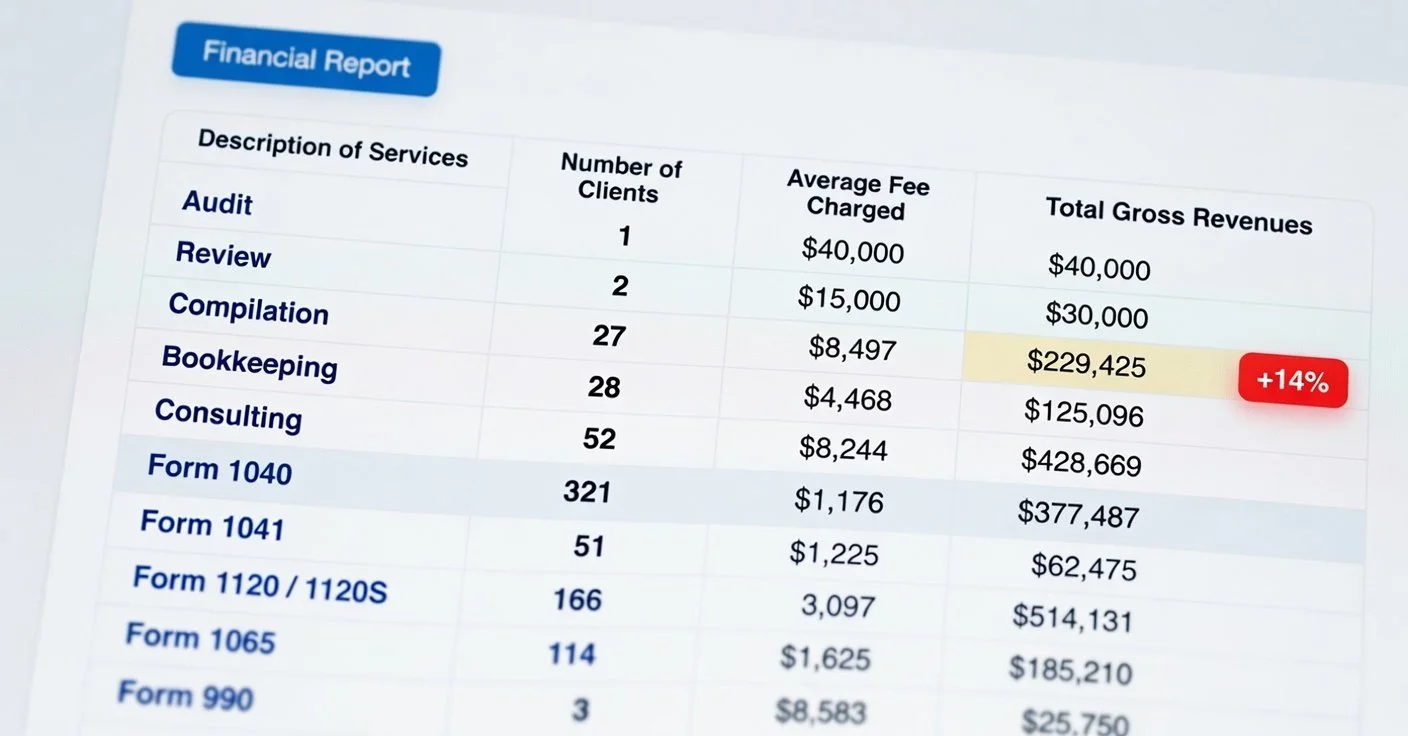
Read MoreAverage client fees and pricing power are key indicators of revenue quality. Buyers in 2026 pay close attention to these metrics when assessing a CPA firm’s QoE and long-term value.
Read MoreWorking capital pegs and adjustments are one of the most common sources of last-minute changes to your sale price. Understanding how buyers calculate them can help you protect your final check.
Read MoreTechnology infrastructure has become a major valuation driver in CPA firm M&A. Buyers in 2026 heavily favor firms with modern, cloud-based systems that improve efficiency, scalability, and client experience.
Read MoreRelated party transactions are one of the most frequently scrutinized areas in CPA firm QoE reviews. Understanding how buyers treat rent, payroll, and other expenses can help you avoid costly valuation adjustments.
Read MoreSuccession readiness is a major factor in buyer confidence. For mid-sized CPA firms, strong transition plans can support higher multiples, while weak succession readiness often leads to valuation discounts and longer seller involvement.
Read MoreInconsistent or poor financial reporting is one of the fastest ways to lose buyer confidence. Understanding the red flags buyers scrutinize during QoE due diligence can help you avoid costly valuation discounts.
Read MoreHigh owner dependency is one of the most common reasons buyers reduce offers or walk away from CPA firm deals. Understanding what buyers see — and how to address it — can protect and significantly increase your exit value.
Read MoreClient retention is one of the most closely watched metrics during buyer due diligence. For CPA firms in the $750K–$5M range, strong retention trends can significantly boost your multiple, while declining trends can lead to heavy discounts.
Read MoreRevenue mix is one of the first things sophisticated buyers examine during Quality of Earnings reviews. For CPA firms in the $750K–$5M range, the balance between tax work, CAS, advisory, and other services can dramatically influence the multiple you receive.
Read More