
The Real Cost of High Owner Dependency in CPA Firm Sales – What Buyers See in 2026
Ashley-Kincaid | July 6, 2026
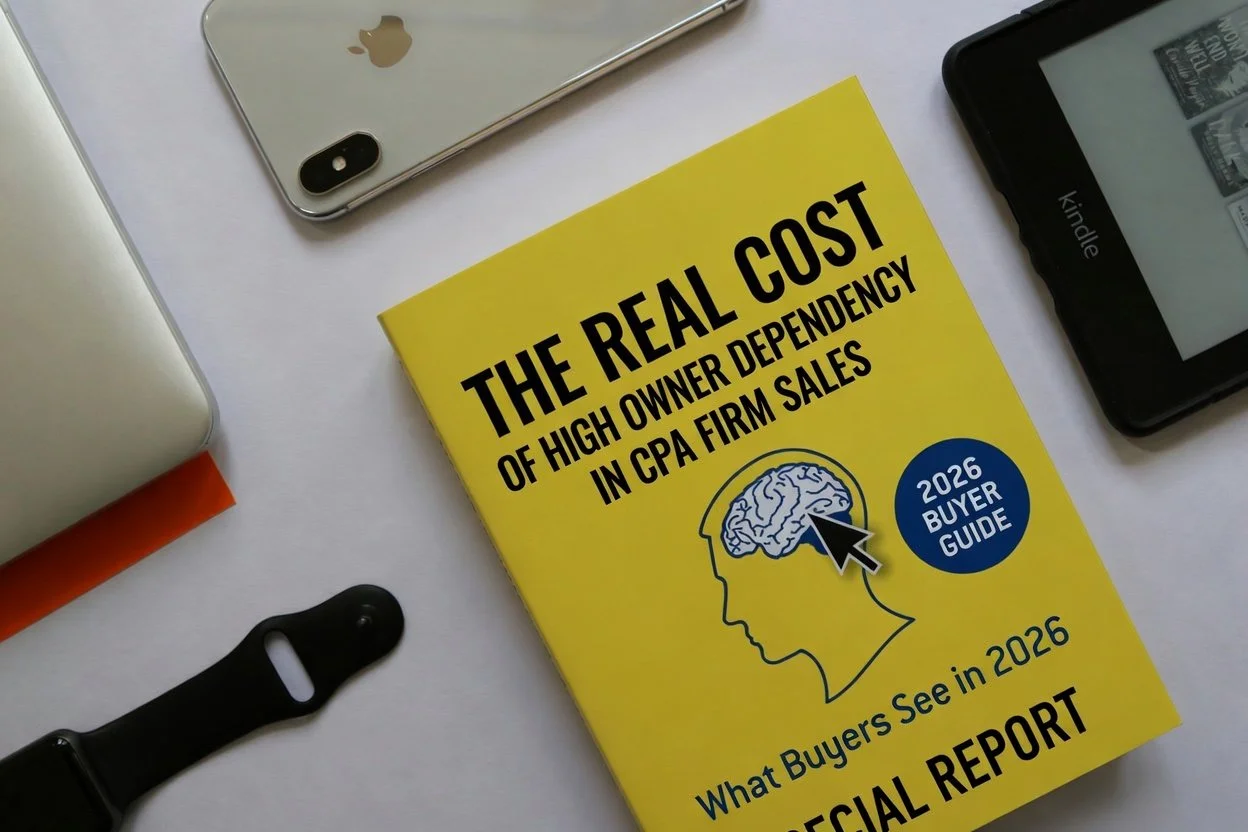
Owner dependency remains one of the biggest valuation challenges for many CPA firms in the $750K–$5M revenue range. Even when the financial statements look strong on paper, excessive reliance on the owner for client relationships, day-to-day operations, rainmaking, or key decision-making can dramatically impact the final sale price, deal structure, and overall attractiveness to buyers.
In today’s market, private equity platforms and strategic acquirers are not simply purchasing a book of business — they are acquiring an operating company that must continue generating predictable cash flow after the current owner steps away. High owner dependency raises several red flags: potential client attrition, operational disruption during transition, higher replacement costs, and increased execution risk. As a result, buyers often respond with lower EBITDA multiples, longer required seller transition periods, larger escrows, or more conservative earn-out structures.
For many owners in this revenue segment, reducing owner dependency is one of the highest-ROI activities they can undertake before going to market.
As explained in our pillar guide, “How Private Equity and CPA Firm Buyers Evaluate Quality of Earnings (QoE) in 2026”, buyers pay close attention to key person risk during due diligence. They want assurance that the business can continue successfully without the current owner.
Why Buyers Are Highly Sensitive to Owner Dependency
Private equity platforms and strategic acquirers are purchasing a scalable business, not a personal practice. High owner dependency increases several risks they are unwilling to underwrite at premium multiples:
Potential client attrition after the owner departs
Operational disruption during the transition period
Higher costs and time required to replace the owner’s contributions
Greater uncertainty around future growth and cash flow
Because of these concerns, buyers often respond with several protective measures that directly affect the seller’s outcome:
Lower EBITDA multiples (typically 0.5x to 1.5x lower than comparable firms with strong teams)
Longer required seller transition periods (often 1 to 3 years instead of 6–12 months)
Larger escrows or holdbacks (to cover potential client attrition or performance shortfalls)
More conservative earn-out structures tied to post-sale revenue or client retention targets
These adjustments can easily reduce the effective purchase price by hundreds of thousands — or even millions — of dollars, making owner dependency one of the most expensive issues to resolve late in the sale process.
What Buyers Specifically Look For
During the Quality of Earnings review, buyers evaluate owner dependency through several key lenses:
Client Relationship Concentration — What percentage of top clients consider the owner their primary contact?
Rainmaking vs Delivery Role — How much new business is generated through the owner’s personal efforts?
Operational Involvement — Does the owner still handle significant day-to-day management and decision-making?
Knowledge Transfer — Are client knowledge, processes, and institutional information properly documented and shared with the team?
Firms with heavy owner involvement across multiple areas are viewed as higher risk.
Real-World Valuation Impact
Consider two $3.4M revenue CPA firms going through buyer QoE review:
Firm A has successfully built a capable second-tier team. The owner focuses on strategy and select key clients, while day-to-day operations and most client relationships are managed by experienced staff. Buyers see low key person risk and comfortably apply a 4.4x normalized EBITDA multiple.
Firm B remains highly owner-dependent. The owner is the primary contact for most major clients and makes the majority of key decisions. Buyers perceive elevated transition risk and apply a more conservative 3.2x multiple.
The difference in enterprise value can easily exceed $1.1 million – $1.5 million. This gap highlights why reducing owner dependency is often one of the highest-ROI activities a seller can undertake before listing the firm.
How Buyers Quantify the Risk
Buyers frequently assign a “key person discount” based on the level of dependency. This can manifest as:
Lower normalized EBITDA (due to higher projected replacement compensation costs)
Reduced EBITDA multiple (typically 0.5x – 1.5x lower)
Longer mandatory seller transition periods
Increased escrow or earn-out requirements
Actionable Steps to Reduce Owner Dependency
Build and Empower a Strong Management Team — Develop clear roles and decision-making authority for senior staff and managers.
Systematically Transfer Client Relationships — Gradually introduce team members to key clients well in advance of any sale process.
Document Processes and Institutional Knowledge — Create written procedures for client service, operations, and management decisions.
Diversify Revenue Sources — Reduce reliance on owner-generated business development.
Implement Formal Succession Planning — Develop a written transition plan with timelines, responsibilities, and milestones.
Firms that make visible progress in these areas are viewed as significantly more attractive and lower-risk acquisition targets.
Conclusion
High owner dependency carries a very real and often expensive cost in today’s CPA firm M&A market. Buyers see it as increased risk and price it accordingly. By proactively reducing dependency, you can strengthen your firm’s Quality of Earnings profile, command higher multiples, and achieve a smoother, more profitable exit.
For a complete understanding of how buyers evaluate all aspects of your firm, read our pillar guide: How Private Equity and CPA Firm Buyers Evaluate Quality of Earnings (QoE) in 2026
Ready to Maximize Your Firm’s Value?
If you are a serious CPA firm owner actively considering a sale or succession in the next 12–60 months, contact Ashley-Kincaid today for a confidential, no-obligation valuation and QoE readiness assessment.
Our team specializes in helping motivated sellers in the $750K–$5M range gain clear, buyer-perspective insights, strengthen earnings quality, reduce key risks, and position their firm for the strongest possible outcome in today’s market.