
SDE vs Normalized EBITDA: Which Valuation Metric Should You Use for Your CPA Firm in 2026?
Ashley-Kincaid | July 14, 2026
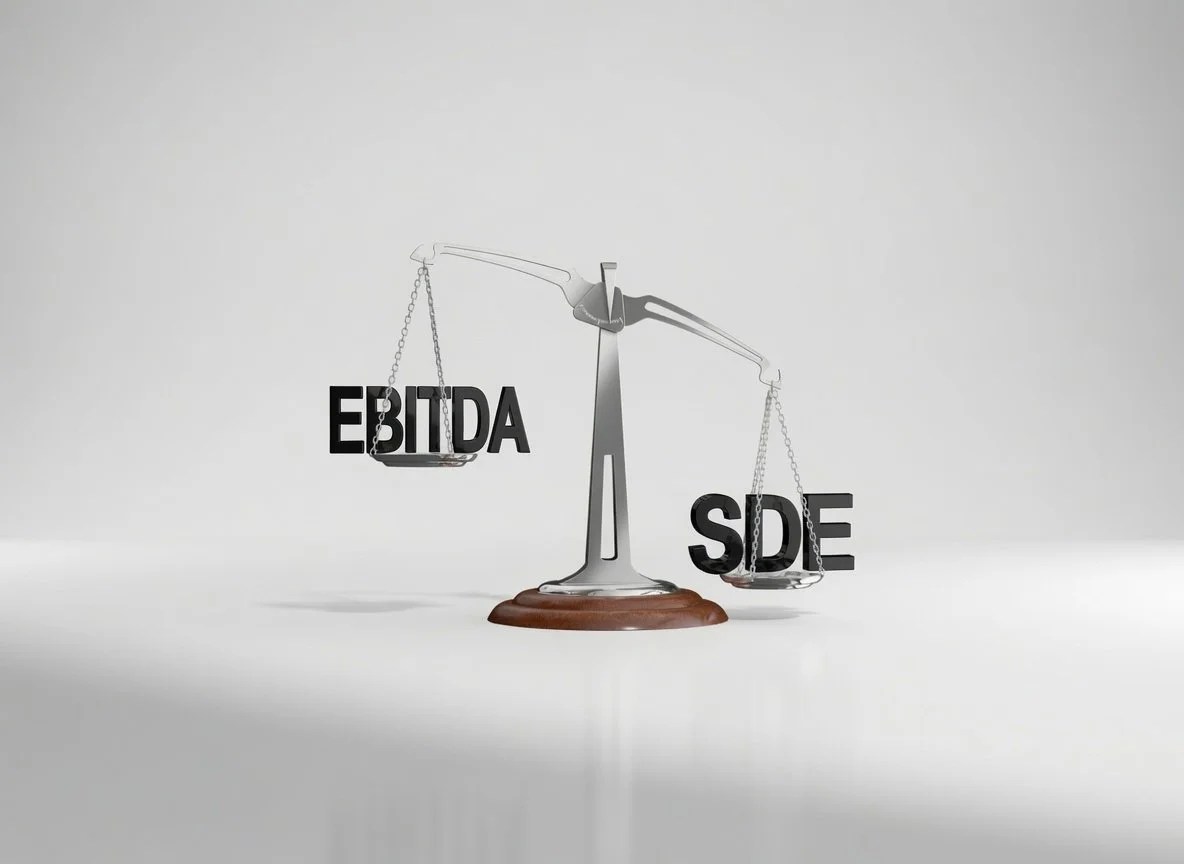
When valuing a CPA firm for sale in 2026, two metrics dominate the conversation: Seller’s Discretionary Earnings (SDE) and Normalized EBITDA. Choosing the right one — and presenting it correctly — can have a major impact on your final sale price and buyer interest.
The choice between these two metrics is not just a technical detail; it signals to buyers how sophisticated and buyer-ready your financial presentation is. SDE is simpler and more owner-focused, while Normalized EBITDA reflects a more professional, sustainable view of the business. Using the wrong metric (or presenting it poorly) can lead to lower perceived value, heavier buyer scrutiny, or even reduced offers. In contrast, presenting the appropriate metric with clear, well-documented support builds credibility and often results in stronger multiples and better deal terms.
Understanding the Two Metrics
Seller’s Discretionary Earnings (SDE) — SDE is most commonly used for smaller, owner-operated businesses (typically under $1.0M revenue). It starts with net income and adds back owner-specific expenses and discretionary items to show what the business truly earns for the current owner.
Key add-backs typically include:
Owner salary, bonuses, and benefits above a market replacement cost
Personal expenses run through the business (vehicles, travel, meals, entertainment, etc.)
One-time or non-recurring items
Interest, depreciation, and amortization
SDE is simple and intuitive for buyers looking at lifestyle businesses or smaller practices where the owner is heavily involved in day-to-day operations.
Normalized EBITDA — Normalized EBITDA is the preferred metric for mid-sized and larger firms ($1M+ revenue) and is the standard used in sophisticated LBO models by private equity platforms and experienced strategic buyers.
It focuses on the sustainable earning power of the business under professional management after the owner exits. The process starts with reported financials and applies more rigorous adjustments:
Adds back non-cash items (depreciation & amortization)
Normalizes owner compensation to a true market-rate salary for a professional manager
Removes one-time, non-recurring, and discretionary items
Applies a conservative Quality of Earnings (QoE) haircut to reflect post-acquisition risks such as client attrition, key-person dependency, or integration challenges
For a detailed step-by-step process, see our pillar guide CPA Firm Valuation: A Conservative LBO Approach – Part 1: Inputs & Normalized EBITDA.
Key Differences and When to Use Each
| Metric | Best For | Focus | Typical Buyer Type | Adjustment Approach |
|---|---|---|---|---|
| SDE | Smaller firms (< $1M) | Owner benefit & lifestyle | Individual / Strategic | Heavy owner add-backs |
| Normalized EBITDA | Mid-sized & larger firms ($1M+) | Sustainable business earnings under professional management | PE Platforms & Sophisticated Strategic | Market-rate normalization + QofE haircut |
In 2026, private equity and larger strategic buyers almost always prefer Normalized EBITDA because it better reflects what the business can earn under new ownership. Strategic buyers may accept SDE for smaller practices but shift to EBITDA as size increases. For more on how buyers assess overall quality of earnings, see our pillar guide How Private Equity and CPA Firm Buyers Evaluate Quality of Earnings (QoE) in 2026 – Complete Guide.
Real-World Impact on Valuations
A $2.8M revenue firm presenting only SDE might be valued at approximately 3.0x–4.0x on an SDE basis. The same firm presenting clean Normalized EBITDA with strong qualitative factors could command 3.5x–5.1x on an EBITDA basis, adding $400K–$800K+ in enterprise value.
For broader context on PE strategies and valuation, see our article Multiple Arbitrage & PE Fund Deployment Cycles: How CPA Firm Sellers Can Maximize EBITDA Multiples in 2026.
Actionable Strategies to Choose and Present the Right Metric
Determine Your Firm Size and Buyer Profile — Use SDE for smaller, owner-heavy practices; shift to Normalized EBITDA as revenue grows or when targeting PE buyers.
Prepare Both Metrics - Calculate both SDE and Normalized EBITDA with detailed workpapers. This shows sophistication and prepares you for different buyer types.
Focus on Normalization Quality — Document all add-backs and adjustments thoroughly. Buyers will challenge aggressive normalizations.
Highlight Qualitative Strengths — Pair your chosen metric with strong qualitative factors (recurring revenue, retention, technology) to support a higher multiple.
Work with an Experienced Advisor — An advisor can help you decide which metric to lead with and prepare the supporting documentation buyers expect.
How Ashley-Kincaid Helps Clients
We help serious CPA firm owners determine the right valuation metric for their size and target buyers, prepare clean normalized financials, and position their firm for the strongest possible multiple. Our deep relationships with active PE platforms and strategic buyers allow us to know exactly what metrics and supporting documentation are expected in 2026.
If you want to understand which valuation metric is best for your firm — and how to present it to maximize your sale price — contact Ashley-Kincaid today for a confidential assessment.