Succession Planning for a PE Exit: How to Prepare Your Team for a Smooth Transition
Ashley-Kincaid | July 2, 2026
Here's the updated section with relevant references from your Articles page:
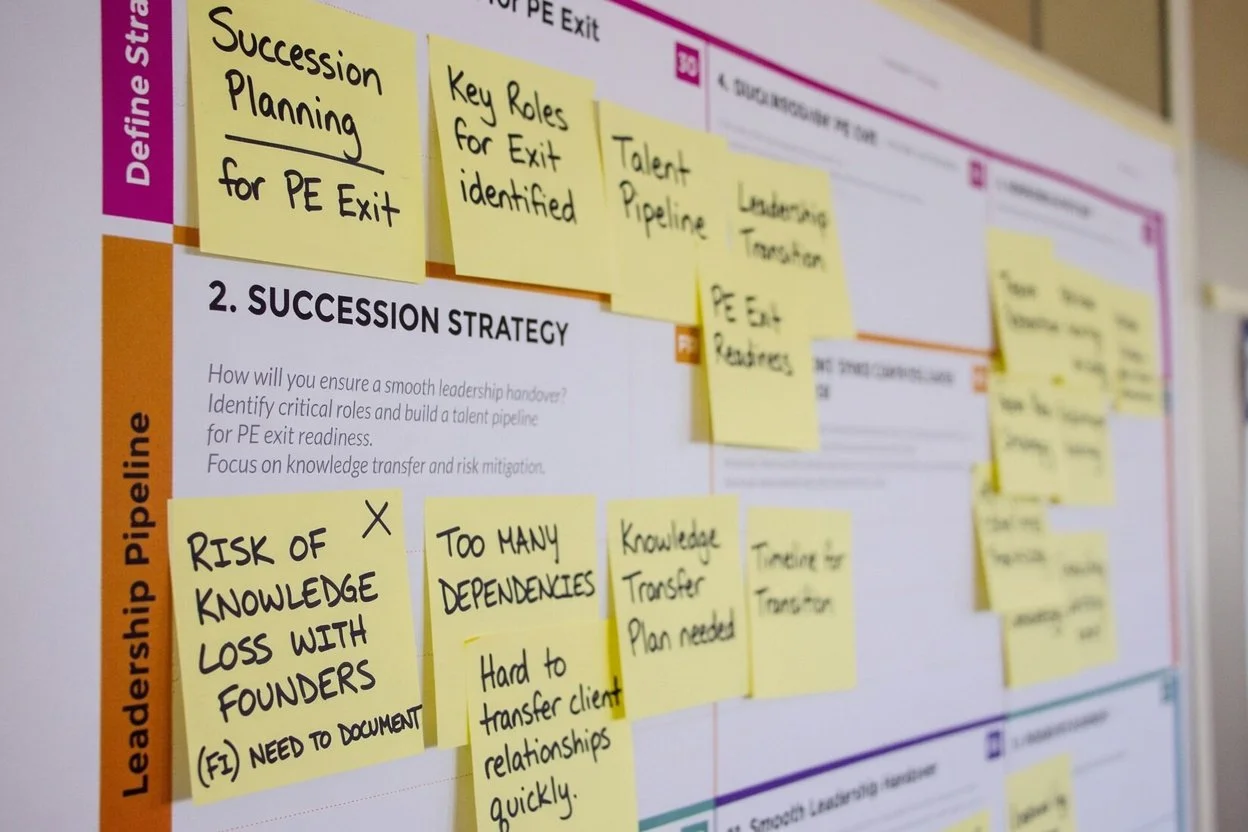
Succession planning is one of the most critical — yet often overlooked — elements of preparing for a private equity exit in 2026. PE buyers place heavy emphasis on the strength, depth, and independence of your team, as they want to ensure the firm can thrive and scale without heavy reliance on the selling owner. A well-prepared succession plan demonstrates operational maturity, reduces key-person risk, supports higher valuation multiples, and leads to smoother post-sale integration and earn-out achievement. Without a clear plan, buyers may perceive higher transition risk, which can result in valuation discounts, larger earn-out contingencies, or more restrictive post-sale employment terms. In contrast, firms with documented leadership development, cross-training programs, and clear succession roadmaps stand out as lower-risk, higher-upside opportunities that align with PE platforms’ goals for rapid scalability and long-term growth.
As specialists in CPA firm M&A with a proprietary database of over 60,000 firms and strategic relationships with PE and CPA firm buyers that are unique in the industry, Ashley-Kincaid helps sellers build robust succession strategies that align with buyer expectations.
Related: Understanding the Private Equity Fund Lifecycle: Why Strategic Timing Benefits CPA Firm Sellers
Why Succession Planning Is Essential for PE Exits
PE buyers are not just purchasing historical revenue or a client list — they are acquiring a scalable, sustainable business that can operate effectively and grow under new ownership with minimal disruption. A strong succession plan demonstrates reduced key-person risk, operational maturity, leadership depth, and long-term stability — all of which are highly valued by PE platforms seeking to integrate the firm quickly and drive future performance. This level of preparedness reassures buyers that the business can maintain momentum, retain key clients and talent, and achieve post-acquisition growth targets. As a result, firms with robust succession plans often command higher valuation multiples, more favorable earn-out structures, and smoother negotiation processes, ultimately leading to better overall deal terms and a more successful transition for the seller. For more on how buyers evaluate transition risk, see our article on succession readiness.
Key Elements of an Effective Succession Plan
Building Second- and Third-Tier Leadership Identify and develop rising leaders who can take on greater responsibility well before the sale process begins. This includes structured mentoring programs, formal leadership training, exposure to client relationships, and gradual delegation of management duties. A strong second- and third-tier bench not only reduces owner dependency but also signals to PE buyers that the firm can scale and integrate smoothly. In our experience at Ashley-Kincaid, firms with documented leadership development plans consistently achieve higher valuations and smoother transitions, as buyers see less execution risk and greater potential for post-acquisition growth.
Documenting Processes and Knowledge Transfer Create comprehensive process manuals, client transition plans, standard operating procedures, and knowledge repositories that capture critical institutional knowledge. This reduces dependency on any single individual and makes post-sale integration significantly easier for the buyer. Well-documented processes also improve operational efficiency in the short term and provide a clear roadmap for new owners. Ashley-Kincaid recommends starting this documentation 12–24 months before marketing to allow time for refinement and testing, which helps minimize disruptions and supports stronger earn-out performance.
Retention Strategies for Key Talent Implement targeted retention bonuses, equity incentives, clear career paths, and competitive compensation packages to keep top performers through the transition period and beyond. PE buyers place high value on talent stability, and a strong retention plan can reduce turnover risk and support client continuity. From our work with sellers, we’ve seen that proactive retention strategies often lead to higher buyer confidence, better deal terms, and smoother post-sale operations.
Client Relationship Transition Develop structured plans for gradually introducing key team members to important clients well before the sale to ensure continuity, maintain trust, and minimize attrition. This might include joint meetings, shared service delivery, and documented client handoff protocols. Strong client transition planning reassures buyers that revenue will remain stable post-sale. Ashley-Kincaid advises starting these introductions 6–12 months in advance, which has proven to improve client retention rates and strengthen the overall value proposition to PE buyers. See our article on client retention trends.
How Ashley-Kincaid Helps with Succession Planning
We work with sellers to assess current leadership depth, identify gaps, and create customized succession roadmaps that resonate with PE and CPA firm buyers. Our strategic relationships with active PE platforms and CPA firms allow us to understand exactly what they look for in a scalable team and how to position your firm accordingly.
Action Steps for 2026 Sellers
Conduct a leadership gap analysis with an advisor.
Begin mentoring and delegating key responsibilities 12–24 months before marketing.
Document processes and client transition plans.
Implement retention incentives for critical team members.
Include succession highlights in your CIM and buyer presentations.
A strong succession plan not only improves your attractiveness to buyers but also ensures a smoother transition and better post-sale outcome for you and your team.
Ready to Build a Strong Succession Plan?
Contact Ashley-Kincaid for a no-obligation consultation. As the leading specialists in CPA firm M&A, we’ll provide a custom succession assessment, help develop a tailored plan, and support you through the entire process to maximize your exit value.